Table of Contents
- Why Energy Efficient Windows Matter in New England
- Understanding Windows for Cold Climates
- Window U-Factor and SHGC: What These Ratings Mean
- Triple-Pane Windows vs. Double-Pane: Which Performs Better
- Window Materials: Vinyl, Wood, Fiberglass, and Composite
- Window Styles That Perform Best in Cold Climates
- Replacement Window Cost and Energy Savings
- ENERGY STAR Certification and Northern Climate Zone Requirements
- Frequently Asked Questions
Last Updated: October 9, 2026
Why Energy Efficient Windows Matter in New England
Energy-efficient windows are critical in New England, where harsh winters and temperature swings create demands standard windows can’t handle.
The best energy efficient windows for new england combine low-emissivity coatings, argon gas fills, and multi-chambered frames to minimize heat loss while managing solar heat gain across variable seasons.
New England demands windows engineered for cold weather: winter temperatures regularly drop below freezing, wind resistance is critical, and condensation management separates adequate windows from excellent ones. Proper replacement windows deliver fewer drafts, more comfort, and lower energy bills.
Understanding Windows for Cold Climates
How cold climate performance differs from other regions
Cold-climate windows face pressures temperate regions don’t: the freeze-thaw cycle tests frames and seals, wind resistance matters during nor’easters, and small air leaks compound over months of heating season.
In warmer climates, solar heat gain is the enemy. In New England, the math flips: winter sun through south-facing windows reduces heating loads, so the best energy efficient windows for new england balance heat retention with strategic solar gain rather than blocking all solar radiation year-round.
Key performance metrics for winter protection
Three metrics dominate cold-climate window selection: U-factor, Solar Heat Gain Coefficient (SHGC), and air leakage ratings.
U-factor measures heat escaping through the window; lower is better. A 0.25 U-factor window loses half the heat of a 0.50 window. For New England, target U-factors below 0.30.
Air leakage, measured in cubic feet per minute (CFM), quantifies outside air infiltrating around frames and seals. Most quality cold-climate replacement windows rate 0.10 CFM or better when installed correctly.
SHGC indicates how much solar radiation passes through. For New England, a moderate SHGC (0.40-0.50) captures beneficial winter sun without summer overheating.
Window U-Factor and SHGC: What These Ratings Mean
U-factor and heat loss prevention
U-factor is the single most important number for cold-climate windows.
A 1970s single-pane window rates around 1.0 U-factor; modern double-pane windows range from 0.30 to 0.50; cold-climate triple-pane can hit 0.20 or lower, real differences in heating costs and comfort.
All Weather Exteriors LLC focuses heavily on U-factor because it directly correlates with heating-season performance. The difference between 0.25 and 0.35 U-factor seems small, but across 20-30 windows over a five-month heating season, the cumulative effect is substantial.
The frame contributes significantly to U-factor: multi-chambered vinyl insulates better than single-chamber, and fiberglass and composite often outperform vinyl in extreme cold.
Solar heat gain coefficient for seasonal balance
SHGC represents the fraction of solar radiation passing through the window into your home, on a 0-to-1 scale. For New England, the optimal SHGC balances winter solar gain with summer heat rejection.
A common mistake is minimizing SHGC everywhere.
East and west-facing windows benefit from lower SHGC (0.35-0.45) because morning and afternoon sun angles create more heat gain. South-facing windows tolerate higher SHGC (0.45-0.55) to capture winter warmth. North-facing windows can go as low as 0.30.
Understanding SHGC prevents over-specifying: SHGC below 0.30 throughout the home wastes winter sun and raises heating costs, while SHGC above 0.60 creates summer overheating.
Triple-Pane Windows vs. Double-Pane: Which Performs Better
Insulation advantages of triple-pane construction
Triple-pane windows insulate measurably better than double-pane: the extra glass pane and gas chamber add resistance to heat flow, achieving U-factors 0.05 to 0.10 lower than comparable double-pane models.
The real-world benefit depends on your situation. In northern New Hampshire and the higher elevations of Massachusetts, triple-pane windows justify their cost premium by reducing heating demand through the long winter.
But triple-pane windows weigh more, need stronger frame engineering, and cost significantly more upfront.
Triple-pane payback depends on heating costs, orientation, and current window condition. Across most of New England, the premium takes 15-25 years to recover through energy savings alone.
When double-pane windows are sufficient
Double-pane windows with modern low-emissivity coatings and argon fills perform remarkably well in New England.
Double-pane makes the most sense for secondary windows, north-facing walls, basements, and interior rooms where maximum performance is less critical, and for anyone upgrading from single-pane.
Double-pane’s weight and durability advantages matter too: easier operation, less frame reinforcement, and smoother installation into older homes, often the practical sweet spot for 1970s and 1980s homes.
Cost-conscious homeowners get excellent results from double-pane when they prioritize frame material and coating quality: a high-performance double-pane in a fiberglass or composite frame outperforms a mediocre triple-pane in basic vinyl.
Window Materials: Vinyl, Wood, Fiberglass, and Composite
Vinyl: affordability and low maintenance
Vinyl remains New England’s most popular frame material: it resists rot, needs no painting, and costs far less than wood or fiberglass, delivering acceptable performance at accessible price points.
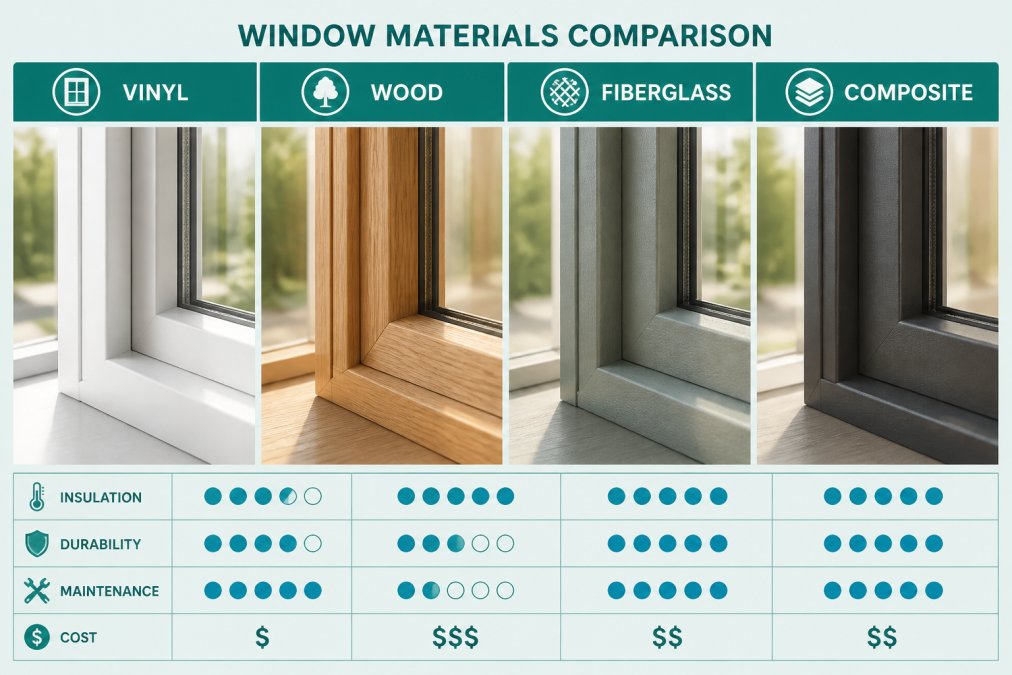
Vinyl’s limitations show in extreme cold: it expands and contracts more than other materials, stressing seals and creating minor gaps, usually minimal with modern multi-chambered frames.
Vinyl’s greatest weakness is sun exposure: UV radiation causes discoloration and brittleness after 20-30 years, so south-facing windows may age visibly before others.
For most New England replacement projects, vinyl works fine; savings versus premium materials often outweigh minor performance compromises. All Weather Exteriors LLC recommends vinyl for homeowners prioritizing value and low maintenance.
Wood: traditional appeal with higher maintenance
Wood windows offer aesthetic qualities vinyl and fiberglass can’t match.
The maintenance burden is substantial: repainting or staining every 5-7 years, constant risk of water infiltration and rot if maintenance lapses, and swelling and shrinking that can warp frames and compromise seals.
For committed homeowners, wood performs admirably, and historic homes often require it for authenticity. But upfront and ongoing costs limit its appeal for most New England homeowners upgrading for energy efficiency.
Modern hybrid windows pair wood interiors with vinyl or fiberglass exteriors, capturing the look with less maintenance. They cost more than pure vinyl but less than solid wood.
Fiberglass and composite: durability in harsh weather
Fiberglass and composite frames excel in New England. They resist temperature extremes, UV degradation, and moisture far better than vinyl, and fiberglass holds dimensional stability across freeze-thaw cycles, so seals stay tight.
Composite frames, made from wood fibers and resin, combine fiberglass’s structural benefits with better insulation.
The main disadvantage is cost: 30-50% more than comparable vinyl. For long-term owners prioritizing maximum durability and performance, the premium justifies itself; for others, the math favors vinyl.
All Weather Exteriors LLC often recommends fiberglass or composite for the most exposed locations, coastal properties, high-elevation homes, or residences facing prevailing winter winds, where superior durability justifies the investment.
Window Styles That Perform Best in Cold Climates
Casement windows and air-tightness
Casement windows, which open outward like a door, seal better than sliders.
That air-tightness makes casements the preferred choice for cold-climate homes, since every bit of draft reduction compounds over a five-month heating season. They also allow partial opening for fresh air without significant drafts.
The operational difference matters: casements crank open and closed deliberately, preventing accidental drafts, while sliders can be left slightly open and create constant infiltration.
One limitation: casements project outward when open, interfering with deck railings or tight spaces. North-facing or interior walls where ventilation is less critical work fine with sliders, reserving casements for primary living spaces.
Double-hung windows and traditional aesthetics
Double-hung windows, with upper and lower sashes sliding vertically, remain popular in New England for their traditional appearance.
Modern double-hungs perform reasonably well in cold climates when engineered properly: compression seals, quality weatherstripping, and proper installation keep leakage acceptable. They still can’t match casements, since sliding mechanisms allow more infiltration.
Double-hungs offer practical advantages: sashes tilt inward for easier cleaning, and they fit tight spaces where casements won’t. For homeowners valuing traditional aesthetics, they remain a solid choice.
The best energy efficient windows for new england in the double-hung style combine quality weatherstripping, proper frame engineering, and careful installation.
Replacement Window Cost and Energy Savings
Factors affecting installation and material costs
Window replacement costs in New England vary widely. Frame material matters, vinyl costs less than fiberglass or composite. Size matters, since larger windows need more material and more complex installation. Volume brings economies of scale.
Installation complexity drives costs substantially. Rotted sills, existing wood frames, or structural damage require more labor and materials.
Location affects pricing: coastal properties pay more for salt-air-rated materials and specialized installation, rural areas may see higher labor costs from travel distances, and fall and spring typically cost more than winter.
All Weather Exteriors LLC provides detailed estimates for your specific situation, evaluating your home’s condition, installation complexity, and material preferences to deliver accurate, transparent costs.
Long-term savings and payback period
Energy savings from replacing old, drafty windows can be substantial.
Calculating payback requires your current heating costs and installed window cost. Spend $3,000 annually on heating and $15,000 on windows, and a 20% energy savings means five-year simple payback. Most homeowners see 7-15 years.
Value extends beyond energy savings: new windows eliminate drafts and cold spots, reduce exterior noise, and enhance curb appeal and home value.
Financing improves the economics: utility rebates, tax credits for qualified improvements, and spreading costs over time make monthly payments manageable.
Tax credits and rebates for energy-efficient upgrades
The federal government periodically offers tax credits for energy-efficient home improvements. These reduce tax liability dollar-for-dollar, more valuable than deductions, and typically apply to windows meeting specific performance standards.
According to ENERGY STAR program guidelines, windows certified for your climate zone qualify for various incentive programs.
Many utilities offer rebates for qualifying energy-efficient windows. Programs vary by provider and change annually, so contact your utility directly, it can substantially reduce net installation cost.
State and local incentives exist too: Massachusetts and New Hampshire occasionally offer grants or rebates, though programs are competitive with limited funding.
ENERGY STAR Certification and Northern Climate Zone Requirements
ENERGY STAR certification standardizes how to identify windows that actually perform in cold climates, testing against specific requirements for each climate zone.
The best energy efficient windows for new england carry ENERGY STAR certification for the Northern climate zone.
Always verify ENERGY STAR certification for the Northern climate zone. Windows meeting national standards but not certified for your zone may underperform, this is the single most important verification step.
| Window Type | Best U-Factor Range | Typical SHGC | Best Frame Material | Installation Priority |
|---|---|---|---|---|
| Primary Living Areas | 0.25-0.30 | 0.40-0.50 | Fiberglass/Composite | High |
| Secondary Rooms | 0.28-0.35 | 0.35-0.45 | Vinyl | Medium |
| North-Facing | 0.28-0.35 | 0.25-0.35 | Any | Lower |
| South-Facing | 0.25-0.30 | 0.45-0.55 | Fiberglass/Composite | High |
Choosing the best energy efficient windows for new england means matching window performance to the climate’s specific demands.
At All Weather Exteriors LLC, we’ve guided hundreds of homeowners through this decision.
Request a free estimate from All Weather Exteriors LLC today.
Frequently Asked Questions
What window ratings should I compare when buying replacement windows?
Focus on U-factor (heat loss rating), Solar Heat Gain Coefficient (SHGC), and air leakage ratings. For cold climates, look for U-factors below 0.30 and SHGC between 0.20 and 0.40 to balance winter insulation with passive solar gain. ENERGY STAR certification confirms the window meets Northern climate zone requirements. Air leakage ratings below 0.3 reduce drafts. These three metrics determine real-world performance in winter conditions.
Are triple-pane windows worth it in a cold climate?
Triple-pane windows provide superior insulation compared to double-pane, with better U-factor performance and reduced heat loss. In cold climates with long, harsh winters, the extra insulation can reduce heating costs noticeably. However, the higher upfront cost means payback takes longer in milder areas. For New England homes with significant winter heating needs, triple-pane windows often justify the investment through improved comfort and long-term energy savings.
How much can energy-efficient replacement windows reduce heating costs?
Savings depend on your current windows’ condition, home size, and insulation levels. Replacing single-pane or drafty older windows with ENERGY STAR-certified models typically reduces heating costs by 10-15% annually. Homes with poor insulation or many large windows may see higher savings. For accurate estimates specific to your home, request a professional energy audit and quote from a licensed contractor who can assess your actual heat loss.
What window frame materials work best in cold climates?
Vinyl, fiberglass, and composite frames all perform well in cold climates. Vinyl is affordable and low-maintenance but can become brittle in extreme cold. Fiberglass and composite materials offer superior thermal performance and durability in harsh weather, resisting expansion and contraction. Wood frames provide traditional aesthetics and good insulation but require regular maintenance. Multi-chambered frames in any material improve insulation by reducing thermal bridging.