Last Updated: November 4, 2026
Quick Summary
A reliable window replacement company is licensed and insured, gives written quotes with matching line items, backs its work with clear warranties, and avoids high-pressure sales tactics. Verify each credential yourself, compare at least three quotes on the same scope, and get every term in writing before signing.
- Confirm the contractor license number is active and in good standing with the issuing agency.
- Ask for a certificate of insurance listing your home as the job site.
- Rebuild every quote into materials, labor, disposal, permits, and exclusions before comparing totals.
- Ask whether the warranty covers labor as well as materials, and who handles claims.
- Walk away from same-day deadlines, large upfront deposits, or reluctance to put terms in writing.
Table of Contents
- Why Hiring the Right Window Replacement Company Matters
- Window Replacement Company Checklist: Verifying Licenses and Insurance
- Questions to Ask a Window Replacement Contractor Before You Sign
- Window Replacement Estimates and Quotes: Comparing Apples to Apples
- Window Replacement Warranties and Post-Installation Support
- Installation Quality Checkpoints and Red Flags to Avoid
- Requesting Your Free Estimate from All Weather Exteriors
- Frequently Asked Questions
Why Hiring the Right Window Replacement Company Matters
Choosing the wrong installer can leave you with drafty windows, water getting in, and a contract you can’t enforce. Hiring a reliable window replacement company protects your home and your budget. The U.S. window installation industry is a $7.8 billion market, with 28,247 businesses competing for work, according to IBISWorld’s 2026 analysis of the U.S. window installation industry. That many options makes careful vetting essential.
Most homeowners hire a contractor for window work rather than doing it themselves. The Home Improvement Research Institute’s 2026 homeowner research reports that a majority of homeowners hire contractors for replacements and upgrades, citing safety and value. Those are the right priorities, but they only pay off when the company you hire is qualified.
A clear vetting process matters. The seven checks below cover licensing, insurance, quotes, warranties, and installation quality. Work through them before you sign anything.
Window Replacement Company Checklist: Verifying Licenses and Insurance
Start with paperwork. A legitimate company should be able to show you its license, insurance, and registrations without hesitation. Ask for copies, then confirm them with the issuing agency yourself rather than relying on a copy alone.
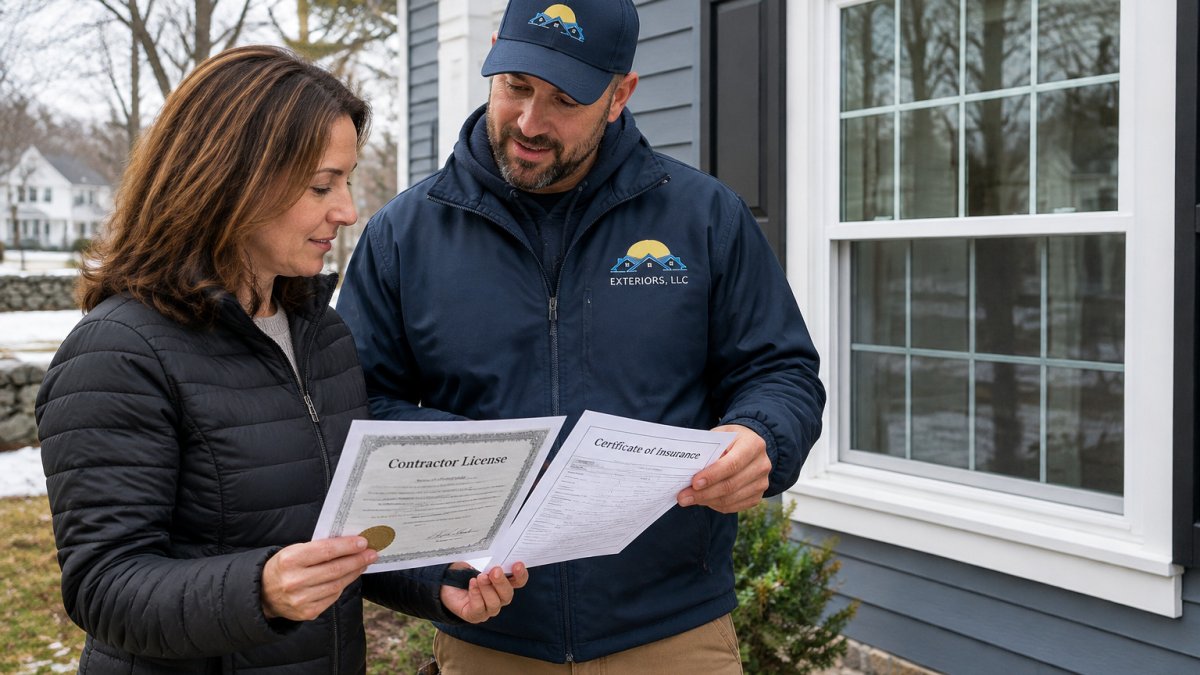
Check three things:
- State or local contractor license: Confirm the license number and that it is active and in good standing.
- General liability insurance: This covers damage to your property during the job.
- Workers’ compensation: This protects you if a worker is injured on your property.
Ask for a certificate of insurance listing your home as the job site. A missing certificate is a red flag.
Questions to Ask a Window Replacement Contractor Before You Sign
Before signing, ask direct questions and get the answers in writing. How long has the company been operating under its current name? Who will install the windows, and are they employees or subcontractors? What brand and product line will you use, and what is the frame material? Written answers about installers, materials, and product lines also make it easier to compare the questions that matter when hiring contractors for repairs.
Also ask how the company handles permits and inspections, and who pulls them. Clear answers now prevent disputes later. Vague replies are a warning sign.
Window Replacement Estimates and Quotes: Comparing Apples to Apples
Most window quotes look similar on the top line and diverge in the details. Two bids for the same set of openings can differ noticeably because one quote includes trim, flashing, disposal, and permit fees while the other leaves them out. The only way to compare fairly is to rebuild each quote into the same line-item structure before you look at the total.
Rebuild every quote into the same five buckets
Ask each company to break its written estimate into these categories, or do it yourself from the line items:
- Materials: window model and product line, frame material, glass package (panes, Low-E coating, argon or krypton fill, spacer type), screens, and grilles. A quote that says “energy-efficient double-hung” without a model number is not comparable to one that names the series and glass spec.
- Labor: removal of the old units, installation of the new ones, and any carpentry. Ask whether the price assumes interior and exterior trim are reused or replaced.
- Disposal: haul-away and dump fees for the old windows. This is a common exclusion; confirm it is listed.
- Permits and inspection: who pulls the permit and whether the fee is in the quote. Permit requirements vary by location.
- Exclusions and allowances: anything marked “by others,” “not included,” or priced as a unit allowance (for example, “trim allowance $X per opening”). These are where the true cost hides.
Normalize the scope before you compare price
Once each quote is in the same buckets, adjust for scope differences. If one company includes full-frame replacement and another is quoting pocket (insert) replacement, they are not the same job, full-frame work involves more labor and trim, and pocket replacement leaves the existing frame in place. Ask each company which method it is pricing and why it recommends that approach for your openings. Similarly, confirm whether the quote covers the same number of openings, the same glass package, and the same finish work on both the interior and exterior.
Watch out: a quote that is dramatically lower than the others usually reflects a narrower scope, not a better deal, find the missing line before you treat it as savings.
Compare the terms, not just the total
Price is one column. Put payment schedule, estimated start date, project duration, and warranty terms beside it. A quote that requires a large deposit before materials are ordered, or that leaves the start date open-ended, carries risk that a slightly higher bid may not. Ask each company to state in writing what happens if the measured openings differ from the original estimate and how change orders are priced.
Get it in writing and keep the scope attached
The final contract should attach the itemized scope you compared, not just a total. That attachment is what you point to if trim is skipped or disposal is billed as an extra. Request at least three written estimates on the same scope, and ask each company to confirm in writing that its price includes permits, disposal, and the finish work listed. For current pricing, request a written estimate directly from each company you are considering.
Quotes for the same openings can differ mainly in what they include, so the article suggests sorting each bid into the same categories before comparing totals.
| Cost bucket | What to confirm | Why it matters |
|---|---|---|
| Materials | Model number, frame material, glass package | Vague descriptions are not comparable |
| Labor | Removal, installation, carpentry, trim | Trim reuse or replacement changes price |
| Disposal | Haul-away and dump fees listed | A common exclusion |
| Permits and inspection | Who pulls the permit and fee included | Requirements vary by location |
| Exclusions and allowances | “By others” or unit trim allowances | Where the true cost often hides |
Window Replacement Warranties and Post-Installation Support
A window replacement carries at least two warranties, and they are issued by different parties with different terms. The manufacturer warrants the product, the sash, frame, glass, and hardware. The installer warrants the workmanship, the installation, sealing, flashing, and finish work. Problems at the seam between them are where homeowners can get sent back and forth. Read both documents before you sign, and ask the installer to put the workmanship terms in the contract itself.
What to check in the product warranty
- Coverage period and what it applies to. Glass seal failures, frame and sash defects, and hardware are often covered on different schedules. Ask for the specific years for each component.
- Labor versus material. Many product warranties cover replacement materials but not the labor to install them. Confirm who pays labor on a covered claim.
- Transferability. Ask whether the warranty transfers to a new owner if you sell the home, whether it must be registered, and whether a transfer fee applies. Transferable coverage can be a resale point.
- Exclusions. Common exclusions include improper installation, alterations, and damage from storms or settlement. Read the exclusion list, not just the coverage period.
What to check in the workmanship warranty
- Length and start date. Workmanship coverage is typically shorter than product coverage. Confirm when it starts, at contract signing, at substantial completion, or at final inspection.
- What counts as a workmanship defect. Leaks at the perimeter, air infiltration, improper flashing, and finish failures should be named. Vague language like “defective installation” invites dispute.
- Who performs the service. Ask whether the installing company sends its own crew or dispatches a subcontractor, and whether service calls are handled locally.
- Response commitments. Get the claim process in writing: whom to call, what information to provide, and the target response time for a leak versus a cosmetic issue.
Ask how claims actually work
A warranty is only as good as the claim process behind it. Ask each company to walk you through a hypothetical claim: who you call first, whether the manufacturer or the installer inspects, how long a replacement unit takes to arrive, and who covers labor during the wait. A company that cannot describe its own process in specific terms is a company whose warranty may be difficult to use.
Watch out: a warranty that requires you to file with the manufacturer first, with no commitment from the installer to handle the labor, can leave you coordinating the repair yourself.
Post-installation support beyond the warranty
Ask what happens after the crew leaves. Does the company offer a final walkthrough and a written punch list? Will it return to adjust a sticking sash or re-caulk a seam during the first year? Get the contact for service in writing, and keep the contract, the itemized scope, and both warranty documents together, you will need them if you ever file a claim or sell the home.
Installation Quality Checkpoints and Red Flags to Avoid
Good installations follow a process. Ask whether the crew checks the rough opening, seals the flashing, shims and levels each unit, and tests for air and water leaks before finishing.
Watch for these red flags:
- Pressure to sign the same day or a “discount” that expires immediately
- Requests for a large upfront deposit before any work starts
- Reluctance to put terms, warranties, or specifications in writing
- No local address, no license number, or no proof of insurance
- Negative reviews that describe the same problem repeatedly
Any company that pushes you to skip these checks is telling you something.
Requesting Your Free Estimate from All Weather Exteriors
If you’re comparing companies, we’d welcome the chance to earn your business. All Weather Exteriors LLC is licensed and insured, with over 25 years of experience serving New Hampshire and Massachusetts. Request a free estimate to get started, or read our guide to energy-efficient window options before you compare quotes.
Frequently Asked Questions
Who is the most reliable window replacement company?
No single company is reliable for every project, so the most dependable choice is the one that meets your checks. Verify the company holds a current state license and general liability and workers’ compensation insurance, ask for local references, and read recent reviews on multiple platforms. Look for consistent themes across reviews rather than a single high rating. Ask whether the crew installing your windows is employed by the company or subcontracted, since employed crews usually give you more direct accountability for workmanship. A reputable provider will answer these questions in writing without hesitation.
What should a window replacement estimate include?
A complete written estimate should list the exact window count, sizes, frame material, glass package and energy ratings such as U-factor and Energy Star certification, along with removal and disposal of old windows, interior and exterior trim work, flashing and sealing, and cleanup. It should also state the warranty terms and the payment schedule. Pricing depends on quantity, window size, material, and site conditions, so ask for an itemized quote rather than a single lump sum. Comparing quotes is only useful when each one covers the same scope of work.
How do window replacement warranties work?
Window replacement warranties usually cover two things: the window product from the manufacturer and the installation workmanship from the contractor. Manufacturer warranties on frames, seals and glass often run for many years, while installation warranties vary by company. Ask exactly what is covered, for how long, whether the warranty transfers if you sell the home, and what steps you must take to file a claim. Get the warranty in writing and keep it with your project records.
Request a free estimate from All Weather Exteriors LLC and see a written, line-by-line quote before you commit.