Table of Contents
- How Much Do New Windows Save on Heating
- New Windows Energy Savings: Replacing Single-Pane and Double-Pane Windows
- Window Heat Loss: Understanding Thermal Performance
- ENERGY STAR Window Savings and Certification
- Do New Windows Pay for Themselves
- Factors That Influence Your Heating Savings
- Beyond Window Replacement: Lower-Cost Efficiency Alternatives
- Frequently Asked Questions
Last Updated: October 21, 2026
How Much Do New Windows Save on Heating
When you’re facing high heating bills, understanding how much do new windows save on heating helps determine if they’re the right fix. But the actual savings depend on several factors that most homeowners overlook.
The real question isn’t “how much will I save?” but rather “how much could I save given my specific situation?” That distinction matters because it changes everything about whether the investment makes sense for your home.
What the Data Shows
New windows reduce heating energy loss, but the amount varies dramatically. A home with single-pane windows replacing them with modern energy-efficient options typically sees heating cost reductions.
Homes in colder climates see larger dollar savings because they run heating systems longer.
Your current window type matters enormously. Replacing single-pane windows produces more dramatic changes than replacing double-pane windows. This is because single-pane windows leak far more heat.
Why Savings Vary by Home and Climate
Several forces shape how much you’ll actually save:
- Heating season length, Longer winters mean more days running your heating system
- Current window condition, Older, damaged, or poorly sealed windows lose more heat than newer ones
- Window area, Homes with more window space see larger total savings
- Installation quality, Poor installation undermines even high-performance windows
- Your heating fuel, Natural gas, oil, and electric heat have different costs per unit
One home might save substantially while an identical home across town saves less. The difference comes down to these variables stacking up differently.
New Windows Energy Savings: Replacing Single-Pane and Double-Pane Windows
Single-Pane to Modern Window Upgrades
Single-pane windows offer almost no insulation. Heat flows through glass and frame constantly. Replacing them with modern double-pane or triple-pane windows stops a massive amount of heat loss.
The improvement is dramatic because single-pane windows are so poor at holding heat.
Single-pane windows also allow air leakage around the frame. Gaps and poor seals let cold air infiltrate your home directly. Modern windows seal much tighter.
Consider this: a single-pane window loses heat roughly three times faster than a modern double-pane window. That’s not a small difference.
Double-Pane to High-Performance Window Upgrades
Replacing double-pane windows with high-performance options produces smaller but meaningful improvements. Double-pane windows already do a decent job insulating compared to single-pane.
High-performance windows add features like:
- Low-emissivity (low-E) glass coatings, These reflect heat back into your home
- Insulated frames, Better frame materials reduce heat transfer at edges
- Triple-pane construction, Extra layers add insulation
- Argon or krypton gas fills, Gases between panes insulate better than air
The upgrade from double-pane to high-performance is real but less dramatic than single-pane replacement. You’re optimizing an already-functional window rather than fixing a broken one.
Window Heat Loss: Understanding Thermal Performance
U-Factor and Solar Heat Gain Coefficient
Two numbers define window performance: U-factor and Solar Heat Gain Coefficient (SHGC).
U-factor measures how much heat flows through the window. Lower is better. A U-factor of 0.30 means less heat escapes than a U-factor of 0.50.
SHGC measures how much solar heat the window lets in. Lower SHGC blocks more sun. In heating climates, you want moderate SHGC to capture free solar heat in winter.
These numbers predict performance but don’t guarantee results. Real-world savings depend on installation and your home’s total thermal picture.
Air Leakage and Drafts
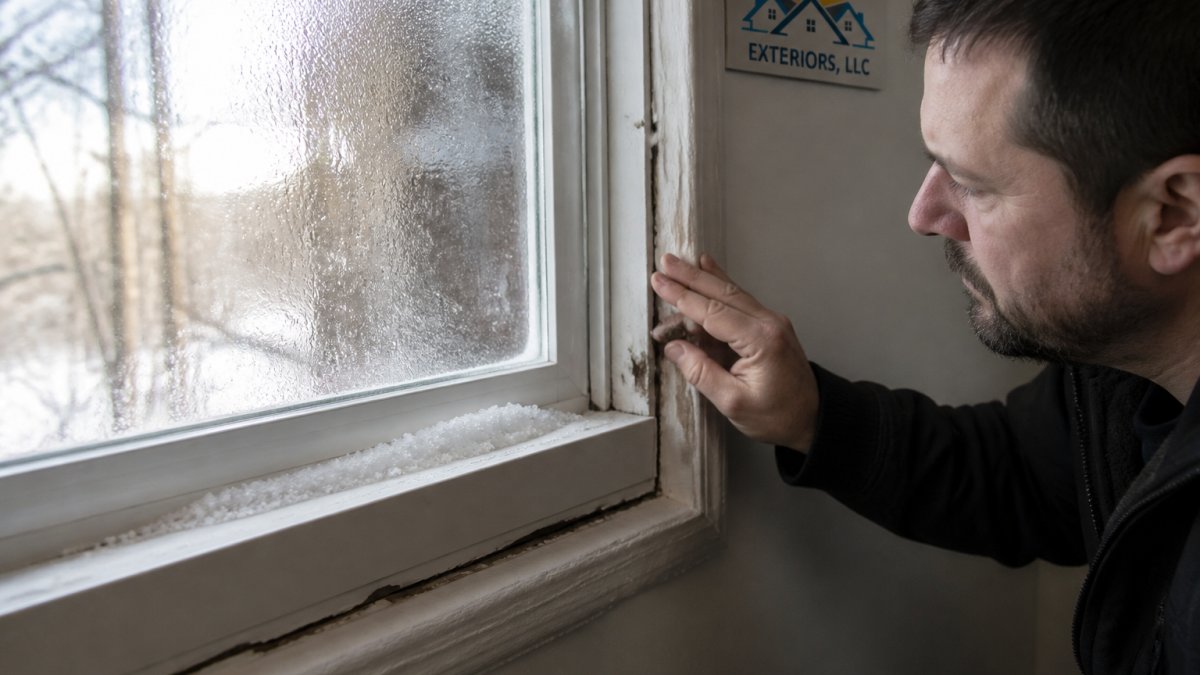
Air leakage matters as much as insulation value. A window with excellent U-factor but poor sealing performs badly. Cold air flows around the frame, negating the glass performance.
Drafts come from:
- Frame gaps, Spaces between window and wall framing
- Seal degradation, Old caulk and weatherstripping fail
- Operator wear, Hinges and locks loosen over time, creating gaps
- Poor installation, Rushed or careless installation leaves gaps
Modern windows seal tighter than old ones. But installation quality determines whether that advantage survives.
ENERGY STAR Window Savings and Certification
ENERGY STAR certification identifies windows that meet federal efficiency standards. These windows perform measurably better than average options.
ENERGY STAR windows must meet specific U-factor and SHGC requirements based on climate zone (Residential Windows, Doors, & Skylights). The program recognizes that different regions need different performance.
Certified windows help you compare options fairly. They’re not the only good choice, but they’re a reliable baseline.
Do New Windows Pay for Themselves
This is the question behind the question. Homeowners ask how much new windows save on heating because they want to know whether the upgrade is worth the money. The honest answer: on heating savings alone, full-window replacement rarely pays back quickly, but the payback picture changes once you account for cooling, comfort, resale value, and the alternatives you didn’t spend money on.
Calculating payback period, with heating-only numbers
Payback period is total installed cost divided by annual savings. The trap is using a blended heating-and-cooling savings figure against a heating-only question. Worked example using the heating-only estimate from the previous section:
- Installed cost for a whole-house replacement (10-12 windows): pricing depends on frame material, glass package, and region
- Estimated annual heating savings: pricing depends on quantity, dates, and delivery
- Heating-only payback: pricing depends on quantity, dates, and delivery
That number is uncomfortable, and it is the number most savings-focused articles avoid. It is also why window replacement is rarely justified on heating savings alone.
What changes the payback math
- Cooling savings. Add the cooling-season share. In a climate with meaningful summer cooling, combined savings can roughly double the heating-only figure, cutting payback substantially.
- Replacing failed windows. If existing windows have broken seals, fogging, rot, or failed operating mechanisms, part of the cost is deferred maintenance you would pay anyway. That portion should not be charged against energy payback.
- Resale value. Window replacement is consistently ranked among remodeling projects with a high cost-recovered ratio at resale, though the exact percentage varies by year and region. That value is separate from energy savings.
- Incentives. Federal tax credits for qualifying ENERGY STAR windows and utility rebate programs can reduce net cost (Windows & Skylights Tax Credit). Verify current eligibility and caps before assuming a credit.
- Fuel prices. Higher local heating costs improve payback; low-cost natural gas lengthens it.
Calculate two payback numbers: one on heating savings alone, and one on combined heating-and-cooling savings plus any incentives. The first tells you whether the energy case stands by itself; the second tells you what the full financial case looks like.
When replacement does not pay back, and what to do instead
If your windows are functional but drafty, a full replacement is often the wrong first dollar. Lower-cost measures frequently deliver better heating savings per dollar spent:
- Air sealing around frames, outlets, attic access, and rim joists, often the highest-return fix
- Weatherstripping on operable windows to close gaps at the sash
- Storm windows to add an insulating layer without replacement
- Repairing or re-glazing failed panes and re-caulking frames
A common pattern: a homeowner spends a few hundred dollars on air sealing and weatherstripping and captures a meaningful share of the heating savings a full replacement would have delivered, at a fraction of the cost. Replacement makes the most financial sense when windows are failing, when you are already renovating, or when comfort and resale value, not energy payback, are the primary goals.
New windows rarely pay for themselves on heating savings alone. They make sense when you combine energy savings with maintenance you would otherwise pay for, cooling savings, incentives, and resale value, and when lower-cost air sealing has already been done.
::: Comprehensive home efficiency strategies often provide a more immediate path to lower high energy bills than window replacement projects alone.
Verifying performance before you buy
Before accepting any savings claim, check the window’s NFRC-rated U-factor and air-leakage rating, confirm the product is appropriate for your climate zone, and ask the contractor for the assumptions behind any savings estimate in writing. A contractor who cannot state the baseline and the assumptions is quoting a sales number, not an engineering one.
Factors That Influence Your Heating Savings
Climate Zone and Heating Season
Colder climates with longer heating seasons see larger savings. A home in Minnesota saves more from window upgrades than one in North Carolina.
This isn’t because northern windows are better. It’s because they run longer. More heating days means more opportunity to save.
Your specific climate zone determines which window performance matters most. Colder regions benefit from ultra-low U-factors. Moderate climates may not need triple-pane windows.
Current Window Condition and Age
Replacing failed windows produces more dramatic savings than replacing adequate ones. A 50-year-old single-pane window with broken seals loses far more heat than a 15-year-old double-pane window.
Age tells part of the story. Condition tells the rest. An older window that’s been maintained performs better than a newer window that’s been neglected.
Installation Quality and Air Sealing
Perfect windows installed poorly perform like mediocre windows. Installation quality determines whether the window’s performance reaches specifications.
Common installation mistakes:
- Leaving gaps around the frame, Air flows through these constantly
- Over-compressing the frame, Warps the window and creates leaks
- Improper caulking, Failed seals let air infiltrate
- Skipping weatherstripping, Edges leak unnecessarily
Professional installation costs more but protects your investment. At All Weather Exteriors LLC, we focus on installation quality because we know it determines real-world performance.
Home Size and Window Area
Larger homes with more window area see larger total savings. A 2,000-square-foot home saves more than a 1,200-square-foot home, all else equal.
Window area as a percentage of wall area also matters. A home with many large windows benefits more from upgrades than one with small, limited windows.
Beyond Window Replacement: Lower-Cost Efficiency Alternatives
Air Sealing Without Replacement
Sealing air leaks costs far less than window replacement but produces meaningful heating improvements. Caulk, weatherstripping, and spray foam close gaps that waste heat.
Air sealing targets:
- Window and door frames, Where they meet the wall
- Electrical outlets, Surprisingly large leak sources
- Attic access, Often poorly sealed
- Basement rim joists, Major leak points
- Plumbing penetrations, Where pipes enter the home
Many homeowners see better payback from air sealing than from window replacement alone. You fix the biggest leaks first for lowest cost.
Storm Windows and Weatherstripping
Storm windows add an insulating layer without replacing existing windows. They’re cheaper than full replacement and help significantly.
Weatherstripping seals the gaps where windows open and close. It’s inexpensive and effective.
These approaches work best combined with air sealing. Together they address heat loss without full window replacement.
Heating costs strain budgets, especially in colder months.
All Weather Exteriors LLC specializes in professional window installation backed by warranties that protect your investment.
Frequently Asked Questions
Do new windows really help with heat?
Yes. Modern energy-efficient windows reduce heat loss through improved insulation, lower U-factors, and better air sealing compared to older single-pane or poorly sealed double-pane windows. Heat escapes through windows via conduction through the glass and frames, plus air leakage around edges. New windows with low-emissivity coatings and insulated frames cut both losses significantly, lowering heating demand and utility bills during cold months.
How much can new windows save on heating bills?
Savings depend on your current windows, climate, and home size. Homeowners replacing single-pane windows with ENERGY STAR certified models often see reductions in heating costs. Those upgrading from older double-pane windows may see savings. Actual savings vary based on installation quality, air sealing, and regional energy prices. Request a personalized estimate to calculate your potential savings.
Do new windows pay for themselves?
Most energy-efficient window replacements have payback periods that vary by climate, current window condition, and local installation costs. Beyond energy savings, new windows increase home comfort, reduce drafts, improve curb appeal, and may add resale value, benefits that extend the overall return on investment well beyond the energy payback period. Homeowners in colder climates typically see faster payback.
What window features help reduce heat loss the most?
Low-emissivity (low-E) glass coatings reflect heat back indoors while allowing sunlight in, dramatically improving thermal performance. Insulated frames (vinyl, fiberglass, or composite) conduct less heat than aluminum. Multiple panes (double or triple) trap air for insulation. High-quality seals and weatherstripping prevent air leakage around edges. A low U-factor (below 0.30 in cold climates) indicates better insulation. Professional installation with proper air sealing is equally important, poor installation negates the window’s efficiency gains.