Last Updated: November 26, 2026
Quick Summary
The average roof storm damage repair cost in the U.S. ranges from a few hundred dollars for a small patch to more than $20,000 for severe structural damage, with most homeowners landing in the low thousands. According to Angi’s storm damage repair cost data, repairs range from $2,632 to $22,127 depending on the type and extent of damage.
- Hail damage repairs average about $4,250 nationally, with most homeowners paying between $375 and $7,500.
- Homeowners insurance typically covers wind, hail, and falling debris damage but rarely covers wear and tear or poor maintenance.
- Photograph every damaged area from the ground with timestamps starting the day of the storm.
- Full replacement costs roughly four times as much as repairing localized damage, so price the repair option first.
- Repair work itself typically takes 1 to 3 days once materials are ordered and the claim is approved.
Table of Contents
- How much does roof storm damage repair cost?
- Repair costs by damage type
- Does homeowners insurance cover roof storm damage?
- Roof storm damage inspection checklist
- Roof repair vs replacement after storm damage
- Storm damage roof repair timeline
- Requesting a Free Estimate from All Weather Exteriors
- Frequently Asked Questions
How much does roof storm damage repair cost?
The average roof storm damage repair cost in the U.S. runs from a few hundred dollars for a small patch to more than $20,000 for severe structural damage, and most homeowners land somewhere in the low thousands.
Below, we break down real cost ranges by damage type, explain what insurance usually covers, and give you a checklist to document a claim before a contractor ever climbs a ladder.
National averages and price ranges
Pricing data from 2026 puts basic storm-damaged roofing work at roughly $9.01 to $11.39 per square foot, according to Homewyse’s cost calculator, though site conditions move that figure considerably. Hail-specific repairs average about $4,250 nationally, with most homeowners paying between $375 and $7,500, per Angi’s hail damage repair estimate.
| Damage type | Typical range | National average |
|---|---|---|
| Hail damage | $375 – $7,500 | $4,250 |
| General storm repair | $2,632 – $22,127 | Varies by severity |
| Basic per-square-foot repair | $9.01 – $11.39/sq ft | , |
What drives your final bill
Four things move the number most: repair scope, roof pitch and complexity, material costs, and labor. A steep roof takes longer and requires more safety setup. Multiple roof layers mean tear-off before any repair. And a single missing shingle costs far less than a leak that has already rotted decking.
Repair costs by damage type
Different storms leave different signatures, and each one prices out differently. Here is what we see most often after a Nor’easter or summer hailstorm rolls through.
Wind damage: missing and lifted shingles
Wind damage repair usually means replacing missing or lifted shingles and resealing the surrounding field. This is often the cheapest category, because the damage is visible and localized. The catch: lifted shingles that look fine can leak for months before you notice.
Hail damage: bruised and cracked shingles
Hail damage is the expensive one. Bruised and cracked shingles lose their granules and their seal, and repairs often require matching discontinued shingle lines. That is why hail repair averages $4,250 nationally. A 2024 ScienceDirect study on hail-risk probabilities examined repair costs across five roof types in North America and found the material you have installed changes your exposure significantly.
Water intrusion and leak repair
Leak repair is where small problems become big bills. Water damage often spreads beyond the roof into decking, insulation, and ceilings. If you see a brown ring on the ceiling, the leak started weeks ago.
Does homeowners insurance cover roof storm damage?
Yes, homeowners insurance typically covers roof storm damage from wind, hail, and falling debris, but it rarely covers wear and tear, age, or poor maintenance. That distinction decides most claims. A 15-year-old roof with a wind-torn section is usually covered. The same roof with curling, worn shingles may be denied as maintenance neglect.
What is typically covered and what is not
- Covered: Wind, hail, fallen tree impact, and resulting water damage
- Usually not covered: Normal aging, poor installation, neglected maintenance, and cosmetic wear
- Depends on policy: Matching shingle availability and code-upgrade costs
If your claim is denied, you still have options. Our guide on what to do when insurance won’t pay for a roof replacement walks through the appeals and financing paths.
Documenting your claim from day one
Start the day of the storm, before anyone touches the roof:
- Photograph every damaged area from the ground, with timestamps
- Save receipts for emergency tarps or temporary repairs
- Keep a written log of every call with your insurer and adjuster
- Do not sign anything from a door-knocking contractor before your adjuster visits
- Get the claim number in writing the same day you file
Watch out: signing a contract before the adjuster inspects can complicate your claim and reduce your settlement.
Roof storm damage inspection checklist
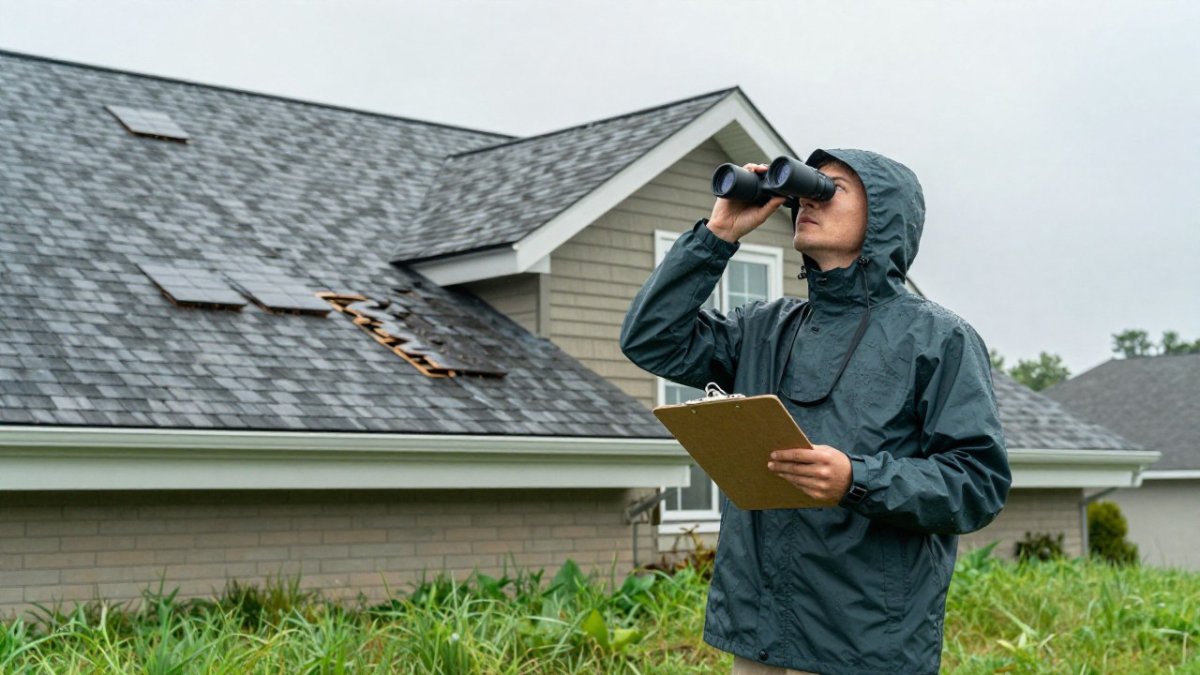
A safe look from the ground tells you a lot before you call anyone. Never climb onto a wet, steep, or damaged roof, and do not walk a roof that has been hit by hail or wind until a professional has checked the decking and flashing. Use binoculars from the lawn, keep both feet on the ground, and work through the checks below in order.
What to look for from the ground
- Missing, lifted, or creased shingles, creases are a wind signature and often mean the shingle seal is broken even if the tab is still in place
- Granules collecting in gutters or at downspout bases, a heavy granule loss after one storm points to hail or impact damage, not normal wear
- Dented gutters, vents, downspouts, or soft-metal flashing, dents are one of the clearest hail signatures and are easier to see from the ground than shingle bruises
How to document what you find
A ground-level inspection is also your first evidence for an insurance claim, so treat it like one. Photograph each item on the list with a timestamp, take a wide shot of each roof slope and a close shot of the damage, and note the date and time of the storm. Save any granules or debris you can collect safely in a bag or envelope, and keep receipts for tarps, buckets, or other emergency supplies.
When a ground check is not enough
If anything on the list is checked, get a professional inspection. Storm restoration work at height is not a DIY job, and some of the most expensive damage, cracked decking, compromised underlayment, water behind siding, is invisible from the lawn.
Watch out: a roof that looks intact from the ground can still have lifted shingle seals and hairline flashing failures that leak for months, so consider a professional inspection even when you cannot see obvious damage.
Roof repair vs replacement after storm damage
Repair is often the right call when damage is localized and the roof has life left in it. Replacement may make more sense when damage covers a large area or the roof was already near the end of its service life. Because the decision depends on both the extent of the damage and the roof’s remaining life, repair or replace roof sections should be weighed against the same criteria.
A repair-versus-replacement decision framework
Work through these five questions in order. If you answer “replacement” on two or more, get a replacement estimate before you authorize a repair.
- How much of the roof is affected? Damage confined to one slope or a few sections usually supports a repair. Once damage is spread across multiple slopes or more than roughly a third of the roof surface, replacement pricing often becomes competitive with piecemeal repairs.
- How old is the roof? A roof under about 15 years old with good shingle condition is usually a repair candidate. A roof at or past 20 years is often near the end of its service life, and repairing one storm’s damage may just defer the next repair.
- Can the shingles be matched? Discontinued shingle lines are a common problem after hail. If a matching shingle cannot be sourced, a repair leaves a visible patch and may not satisfy an insurer’s matching requirements; replacement may be the cleaner path.
- Is there structural or decking damage? Rotted decking, compromised underlayment, or water intrusion into the attic expands the scope beyond a surface repair and can push the job toward replacement.
- How many repairs has the roof already had? Repeated repairs on the same roof are a signal that the roof is failing in multiple places.
When localized repair makes sense
- Damage is confined to one slope or a few sections
- The roof is under 15 years old and in good condition
- Shingles are still available to match
When full replacement is the better call
- Damage affects more than 30% of the roof surface
- The roof is 20+ years old or already showing wear
- Decking is rotted or the roof has multiple layers
How insurance affects the decision
Insurers generally pay to return the roof to its pre-storm condition, not to upgrade it. That means a repair estimate and a replacement estimate can both be valid under the same policy, and the adjuster’s scope of loss is the document that decides which one is funded.
If you are seeing widespread wear, our roof replacement service covers full tear-off and installation with GAF products. And if you are weighing the signs, this checklist of replacement indicators helps you judge whether repair is still viable.
Storm damage roof repair timeline
Repair timelines depend on the scope of damage, insurance claim processing, and material availability. Here is the general sequence:
| Stage | Typical duration |
|---|---|
| Emergency tarp and stabilization | Same day to 48 hours |
| Insurance claim filing and adjuster visit | 3 – 14 days |
| Contractor estimate and approval | 2 – 7 days |
| Material ordering | 3 – 10 days |
| Repair work | 1 – 3 days |
Delays come from material backorders and claim processing, not usually from the work itself. Before you schedule anyone, read our guide to choosing a roof replacement contractor so you know what to ask.
Requesting a Free Estimate from All Weather Exteriors
You do not need to guess at your roof storm damage repair cost. Visit our professional roofing contractor page to get started.
All Weather Exteriors LLC serves homeowners across New Hampshire and Massachusetts.
Storm season does not wait, and neither should your roof. Get a professional inspection, document everything for your claim, and know your real numbers before you sign anything.
Frequently Asked Questions
What factors affect roof storm damage repair cost?
The biggest drivers are repair scope and severity, roof size and pitch, material type, and how many layers need tear-off. A steep roof or complex roofline raises labor costs because crews need extra safety equipment and time. Regional pricing and emergency repairs also push the storm damage repair cost higher, while a small patch on a simple asphalt shingle roof stays on the low end of the range.
How can I tell if a storm damaged my roof?
Look for missing, lifted, or curled shingles, granules collecting in gutters, dented vents or flashing, and dark streaks or soft spots on the decking. Interior signs matter too: ceiling stains, peeling paint, or daylight in the attic. From the ground with binoculars is safest. A professional roof inspection catches what you cannot see safely from below and documents damage for your insurance claim.
What should I do immediately after storm damage to my roof?
Document everything with dated photos, then call a licensed roofing contractor for a damage assessment. If water is actively entering, a temporary roof tarp can limit secondary damage while you wait. Contact your homeowners insurance company to open a claim and keep every receipt. Avoid climbing the roof yourself, and do not sign anything from a door-to-door contractor before you have a written estimate and verified credentials.
Is it cheaper to repair or replace a storm-damaged roof?
Localized repair almost always costs less up front. Full replacement typically costs considerably more than repairing isolated damage, so repair first when the damage is contained and the roof has remaining service life. Replacement wins when damage covers a large area, the roof is already near the end of its lifespan, or repeated leaks point to widespread failure.
How long does storm damage roof repair take?
Minor repairs often finish in a day. Larger repairs, insurance-backed work, and material orders can extend the timeline, especially after a widespread storm when contractors are busy. The insurance adjuster visit and claim approval are usually the slowest steps. Ask your contractor for a written schedule before work begins.