Table of Contents
- What You’ll Need Before You Start
- Visual Signs of Water Behind Siding
- Detecting Water Behind Vinyl Siding
- Signs of Siding Leaks: Odors and Mold
- Step-by-Step Inspection Checklist
- Common Causes: Why Water Gets Behind Siding
- How to Fix Leaky Siding
- Common Mistakes to Avoid
- Frequently Asked Questions
Last Updated: October 19, 2026
What You’ll Need Before You Start
Inspecting for water behind siding requires a flashlight, moisture meter, ladder, and small screwdriver.
A moisture meter is the most valuable tool, it detects moisture inside walls and behind siding without damage. Many hardware stores rent them for under $20 per day; basic models cost $30-50.
Wear work gloves and safety glasses, and photograph any damage with dates and locations for insurance claims or contractor estimates.
Start your inspection on a dry day. Wet conditions make it harder to spot the true extent of damage and create safety hazards on ladders and roofs.
Visual Signs of Water Behind Siding
The most obvious indicators of water damage appear on interior walls and ceilings. Water stains, peeling paint, and warped materials are your first clues that moisture has penetrated your exterior.
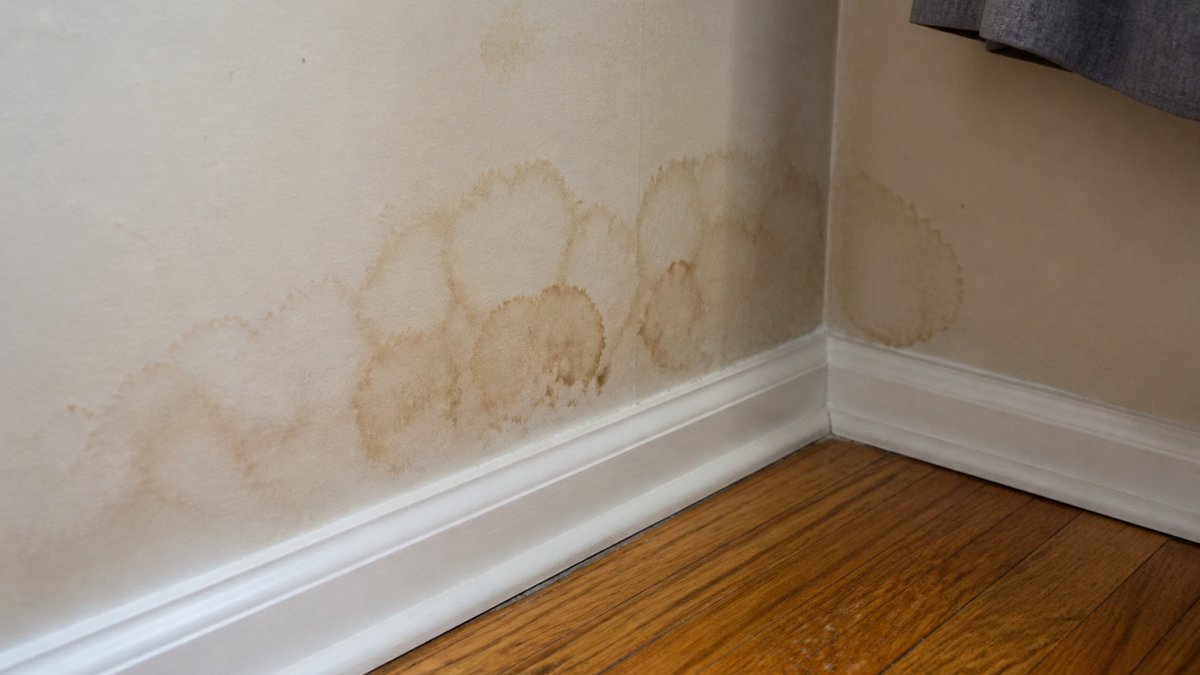
Interior water stains and discolored patches
Water stains on interior walls and ceilings are the clearest sign of moisture problems.
Check ceilings first, especially in upper-story rooms, water travels downward, so ceiling stains often mark the entry point. Stains near windows, doors, or where siding meets trim are red flags.
Stains that reappear after painting indicate active moisture problems: if a stain returns within weeks, water is still entering behind the siding. Stop painting and address the leak source instead.
Peeling and bubbling paint
Peeling paint on interior walls signals moisture buildup behind the surface: water vapor pushes against the paint layer, eventually bursting it and exposing drywall or plaster.
Bubbling paint often appears in clusters, and the affected area may feel soft or spongy.
Exterior peeling paint indicates water has moved through the siding and wall sheathing into the paint layer. Professional assessment becomes urgent at this point.
Warped, buckled, and loose siding panels
Warped or buckled siding shows moisture has compromised the material: vinyl warps under sustained moisture, wood swells and buckles, and metal may rust or separate from the wall.
Walk the exterior and view siding panels from an angle, where warping is easier to spot. Buckled panels stick out or bow inward; loose panels move when touched gently.
Gaps between siding panels indicate movement caused by moisture damage, and they let rain penetrate deeper into the wall cavity, accelerating damage.
Loose or warped siding is a sign that water behind siding has already caused structural damage. Do not delay repairs, the problem will worsen with each rain event.
Detecting Water Behind Vinyl Siding
Vinyl siding is the most common exterior material in residential homes. It’s durable but vulnerable to water intrusion if installed incorrectly or if the flashing fails.
Checking for sunken, protruding, or rusted nails
Examine the nails holding your siding panels. Sunken nails are driven too deep, compressing material and trapping moisture against the siding.
Protruding nails create entry points: rain runs down the siding, enters around the nail head, and works behind the panel.
Rusted nails indicate moisture has already reached the fasteners. Rust stains below nail heads are visible evidence, and rust weakens nails, loosening panels further.
Use a flashlight to examine nails from different angles.
Inspecting weathered wood and rotting sheathing
Behind vinyl siding sits wall sheathing, usually plywood or oriented strand board, which provides structural support and acts as a water-resistive barrier.
Look for gaps where siding meets trim, windows, or doors, these let water reach the sheathing.
Check wood trim around windows and doors. Weathered, splintered, or discolored trim with soft spots indicates water damage, and the sheathing behind it has likely absorbed moisture.
Mold or mildew visible through gaps is a clear indicator of moisture problems.
Signs of Siding Leaks: Odors and Mold
Persistent musty odors often point to moisture problems behind the siding. Mold thrives in damp wall cavities where sunlight doesn’t reach, producing the smell and posing health risks.
Musty odors and mildew detection
A musty smell is a red flag for moisture problems.
Mildew has a distinctive, unpleasant odor. If you notice it, moisture is likely present in your walls or behind your siding, and it grows stronger as mold colonies grow.
Check for visible mildew on interior walls, especially in corners or where walls meet ceilings.
Ventilate rooms with musty smells and run exhaust fans in bathrooms and kitchens. If the smell persists, water is entering from outside behind the siding.
Musty odors combined with visible water stains are strong indicators that professional inspection is needed. Do not ignore these signs.
Mold behind siding and health implications
Mold grows wherever moisture and organic material meet.
Prolonged exposure increases health risks, especially for children, the elderly, and those with compromised immune systems (the CDC). Symptoms include coughing, wheezing, nasal congestion, and eye irritation.
Mold behind siding is especially dangerous because it grows hidden from view, spreading and releasing spores into your living spaces.
If you suspect mold behind your siding, professional testing and remediation are necessary.
Step-by-Step Inspection Checklist
A systematic inspection catches problems before major damage. Follow this checklist and document findings with photos and notes.
Exterior inspection walkthrough
Start outside on a dry day. Walk around your entire home’s perimeter. Look for visible damage to siding, flashing, and trim.
- Examine all siding panels for warping, buckling, or loose sections
- Check nail heads for rust or discoloration
- Inspect caulking around windows, doors, and where siding meets trim
- Look for gaps or separations in siding seams
- Check gutters and downspouts for clogs or damage
- Examine flashing around roof penetrations and where roof meets walls
- Look for water stains on the exterior wall surface
- Check for mold or mildew growth on siding
- Inspect window and door frames for rot or damage
- Note areas where water would collect during heavy rain
Pay special attention to areas that face prevailing winds. Wind-driven rain penetrates these areas more easily. North-facing walls stay wetter longer because they receive less sun. These areas are higher risk for water intrusion.
Interior inspection and moisture measurement
Move inside and inspect walls from the interior. Use your moisture meter to confirm water presence.
- Check all interior walls for water stains or discoloration
- Look for peeling or bubbling paint
- Feel walls for soft or spongy sections
- Check for musty odors
- Use your moisture meter to measure moisture levels in walls
- Take readings at various heights and locations
- Compare readings to the meter’s baseline for dry conditions
- Check closets and areas where moisture might hide
- Inspect basement or crawlspace walls for moisture
- Look for mold growth anywhere on interior surfaces
Moisture meter readings above 20% indicate active moisture problems. Readings above 25% suggest significant water intrusion. Document all high readings with photos and location notes.
Tracing the leak source
Once you’ve identified problem areas, trace the water path backward to find the source. Water enters from above and travels downward through wall cavities.
- Identify the highest water stain or damage location
- Look directly above this area on the exterior
- Check for failed caulking or gaps in siding
- Examine flashing and trim in this area
- Look for damaged or missing shingles on the roof
- Check gutters and downspouts above the problem area
- Note if water stains form a pattern pointing to one location
- Look for evidence of water running down the exterior wall
- Check for cracks in the wall or separation between materials
- Document the suspected entry point with photos
Water typically enters through failed caulking, gaps in siding, damaged flashing, or clogged gutters. Trace the path from the entry point down through the wall cavity to where it emerges inside. This helps you understand how extensive the problem is.
Common Causes: Why Water Gets Behind Siding
Understanding what causes water to penetrate behind siding helps you prevent future problems. Most water intrusion results from failed materials or improper installation.
Failed caulking and compromised flashing
Caulking seals gaps between different materials. Around windows, doors, and where siding meets trim, caulking prevents water from entering.
Flashing is metal or rubber material installed to direct water away from vulnerable areas. Improper flashing installation is a common problem with water behind siding.
Gaps in caulking appear as cracks or missing sections. You can see daylight through failed caulking. Water flows directly through these gaps into the wall cavity.
Gutter overflow and wind-driven rain
Clogged gutters overflow during heavy rain. Water spills over the gutter edge and runs down the exterior wall. This concentrated water flow saturates the siding and forces water behind it.
Wind-driven rain penetrates siding more easily than vertical rain. During storms, wind forces rain horizontally against your home.
Downspouts that discharge water too close to your foundation create problems. Water running down the exterior wall near the foundation can seep behind basement walls.
How to Fix Leaky Siding
Fixing water behind siding depends on the severity and location of the problem. Some repairs you can handle yourself. Others require professional expertise.
When to attempt DIY repairs
Minor caulking failures can be repaired by homeowners. If the problem is limited to a small gap around a window or door, you can recaulk the area.
Loose siding panels can sometimes be reattached. If nails have pulled out or loosened, you can renail the panel. Use stainless steel nails to prevent rust.
Cleaning gutters and downspouts is a task most homeowners can do. Remove leaves and debris from gutters. Flush the gutters with water to ensure proper drainage.
When to call a professional
Call a professional if water has already penetrated interior walls. Interior damage requires assessment of the wall cavity and potential mold remediation.
Professional help is needed if the leak source is unclear. Tracing water paths through wall cavities requires experience and specialized equipment.
Failed flashing or extensive caulking failures warrant professional repair. These repairs often require removing and reinstalling siding sections.
If mold is present, professional remediation is necessary. Mold removal requires proper containment and disposal procedures.
Common Mistakes to Avoid
Many homeowners make mistakes that worsen water damage or create new problems.
Don’t ignore early warning signs.
Don’t paint over water stains without fixing the source.
Don’t use caulking as a permanent fix for major gaps. Caulking is a temporary solution for small gaps.
Don’t delay professional assessment if you find mold. Mold behind siding requires professional remediation.
Don’t assume all water stains come from outside. Interior plumbing leaks, roof leaks, and condensation can cause stains.
Frequently Asked Questions
What are the most common signs of water behind siding?
The most visible indicators include water stains and discolored patches on interior walls and ceilings, peeling or bubbling paint, warped or buckled siding panels, and musty odors. Exterior signs include sunken or protruding nails, weathered wood, and rotting sheathing behind the siding. If you notice any combination of these signs, water intrusion is likely occurring behind your siding.
How can I tell if water is getting behind vinyl siding?
Inspect vinyl siding closely for rust stains around nails, soft or spongy spots when you press on panels, and visible gaps or separation at seams. Check the wall-resistive barrier and flashing around windows and doors for deterioration. Inside, look for water stains that align with exterior seams or openings. A moisture meter can confirm water presence behind the panels without causing damage.
Can water behind siding cause mold growth?
Yes. Moisture trapped behind siding creates an ideal environment for mold and mildew growth. Mold thrives in dark, damp spaces and can spread through wall cavities and insulation. Beyond aesthetic concerns, mold exposure poses health risks, particularly for children, elderly individuals, and those with respiratory conditions. If you detect musty odors or visible mold behind siding, professional assessment is essential to prevent structural damage and health hazards.
When should I call a professional about water behind siding?
Contact a professional immediately if you discover active water intrusion, extensive mold growth, rotting wood sheathing, or structural damage. If interior water damage is widespread or if you cannot locate the leak source, professional leak tracing and moisture detection equipment are necessary. Professionals can also assess whether repairs are sufficient or if siding replacement is needed to prevent future water damage.
Water damage behind siding threatens your home’s structural integrity and your family’s health. Early detection stops problems before they become expensive. If you’ve found signs of water behind siding in your inspection, professional evaluation is the next step. At All Weather Exteriors LLC, we provide thorough inspections and precise repairs backed by our Master Elite® Certification and comprehensive warranties. Request a free estimate today to protect your home from further water damage.