Last Updated: October 25, 2026
Quick Summary
How long does roof replacement take? For most residential homes, a complete roof replacement takes one to three days. A straightforward single-story home with standard asphalt shingles might finish in one day, while larger or more complex roofs typically need two to three days of labor.
- Asphalt shingles take one to two days for an average-sized home because they are lightweight and straightforward to install.
- Metal roofing takes two to three days due to precision seaming and fastening requirements.
- Roof decking damage discovered during tear-off can add one-half to one full day to the project timeline.
- Rain, high winds above 20 mph, and extreme temperatures halt work immediately and cause weather delays.
- The full project from signed contract to final inspection spans one to three weeks, not just the two to three days of active construction.
Table of Contents
- Typical Roof Replacement Duration
- Roof Replacement Timeline by Material Type
- Factors That Affect Roof Replacement Time
- The Roof Tear-Off and Replacement Process
- Understanding Your Roof Replacement Timeline
- How Roof Replacement Weather Delays Impact Your Project
- Scheduling Your Roof Replacement Estimate
- Frequently Asked Questions
Typical Roof Replacement Duration
How long does roof replacement take? For most residential homes, a complete roof replacement takes one to three days. A straightforward single-story home with standard asphalt shingles might finish in one day, while larger or more complex roofs typically need two to three days of labor.
The timeline depends on several factors. Roof size matters most: a 1,500 square foot roof moves faster than a 3,000 square foot installation. Weather plays a role too, rain, high winds, or extreme heat can slow or halt work. The condition of your existing roof also affects timing; if it comes off cleanly, the crew works faster, but hidden damage changes everything.
All Weather Exteriors LLC has extensive experience with roof replacements across the region. Most projects follow a predictable rhythm: tear-off, inspection, installation, and cleanup.
“Roof replacement” actually involves multiple stages. Shingle installation might take one day, but the full project, tear-off, repairs, and cleanup, spans the full timeline above.
Roof Replacement Timeline by Material Type
Different roofing materials require different installation times. Asphalt shingles, the most common choice, typically take one to two days for an average-sized home because they’re lightweight and straightforward to install.
Metal roofing takes longer, usually two to three days, because panels require more precision: seams must be sealed correctly and fastening takes more care than nailing shingles. The upside is that metal roofs often last longer and handle harsh weather better.
Wood shakes and shingles demand even more time, three days or more, because each piece requires individual placement and treatment. The craftsmanship slows the process, but the aesthetic appeal and durability appeal to many homeowners.
Slate and tile roofing are the slowest options. These materials are heavy and fragile, requiring skilled labor and careful handling. A slate roof might take four to five days or longer, depending on complexity.
Here’s how the materials stack up:
| Material | Typical Installation Time | Complexity |
|---|---|---|
| Asphalt shingles | 1-2 days | Low |
| Metal roofing | 2-3 days | Medium |
| Wood shakes | 3-4 days | High |
| Slate or tile | 4-5+ days | Very high |
Choosing the right roofing material involves more than just installation speed. Consider durability, energy efficiency, and how the material performs in your climate. Choosing the Right Roofing Material for Your Home can help you weigh these factors before making your decision.
Factors That Affect Roof Replacement Time
Several variables influence how quickly a roof replacement project moves forward.
Roof size and square footage directly impact labor time. Larger homes require more materials to install and more area to cover.
Roof pitch and complexity matter significantly. A simple, low-pitch roof is faster than a steep, complex design with multiple valleys and angles. Steep roofs require safety equipment and slower work, and homes with dormers, skylights, or multiple roof planes take longer because each section demands individual attention.
Roof decking condition can extend your timeline unexpectedly. If the decking underneath the old shingles is solid, installation proceeds smoothly. But rotted or damaged decking requires replacement. This adds one-half to one full day to the project, depending on how extensive the damage is.
Crew size and experience affect speed. A larger, well-coordinated crew finishes faster, and experienced crews work more efficiently because they anticipate problems.
Weather conditions are the biggest wildcard. Rain halts work immediately, high winds make the roof too dangerous, extreme heat softens shingles, and cold weather makes materials brittle.
Material delivery timing can cause delays before work even starts, which is why scheduling delivery before the crew arrives matters.
The Roof Tear-Off and Replacement Process
The tear-off phase removes your old roof completely, often the most disruptive part of the project. The crew strips away old shingles, nails, and underlayment down to the bare decking.
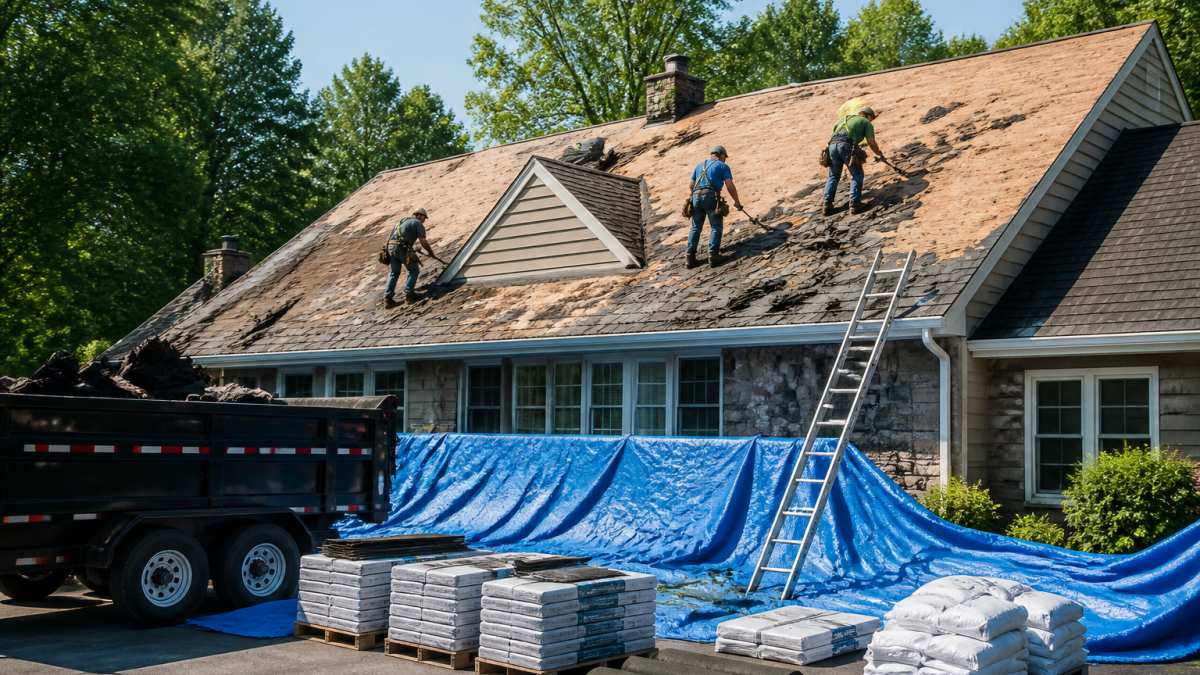
Tear-off typically takes four to six hours for an average roof, though larger roofs take longer. Old materials get loaded into dumpsters or trucks for disposal. This is loud, dusty work that creates a lot of activity around your home.
Once the old roof is gone, the inspection begins. The crew examines the decking for rot, water damage, or structural issues.
After decking is confirmed solid, the crew installs underlayment, a protective layer between decking and new shingles. Then shingles get nailed in overlapping rows, starting at the bottom and working toward the peak, ensuring water sheds properly.
The final steps include installing flashing around chimneys and vents, installing ridge caps at the roof peak, and a thorough cleanup. A professional crew removes all nails, debris, and old materials from your yard and property.
Understanding Your Roof Replacement Timeline
Most duration answers stop at “one to three days,” but that figure describes active construction, not the full project calendar. Installation occupies two to three days on site, while the project from signed contract to final inspection spans one to three weeks.
Here is a practical, phase-by-phase schedule with realistic ranges. Treat these as typical assumptions for an average single-family asphalt shingle roof; your contractor’s written schedule should replace them.
Phase 1: Contract, permits, and scheduling (3-10 business days before work). After you sign, the contractor pulls the building permit and orders materials. Permit review varies widely by jurisdiction, from same-day issuance to a week or more for plan review. Standard asphalt shingles usually arrive in a few days, but specialty metal, slate, or tile can run several weeks. This phase is the most common reason a project “starts late.”
Phase 2: Material delivery and staging (1 day before or morning of). Materials arrive by truck and are staged on the ground or loaded to the roof. The crew lead walks the property, confirms access, and reviews the scope.
Phase 3: Tear-off and deck inspection (0.5-1 day). The old roof is removed down to the decking. The crew inspects the deck for rot, soft spots, and failed fasteners.
Phase 4: Decking repairs and underlayment (0.5 day, longer if damage is found). Minor repairs add hours; extensive rot or structural repairs can add one to two days and may require a change order before work continues.
Phase 5: Installation (0.5-1.5 days). Underlayment, drip edge, valley flashing, shingles, and ridge caps go down in sequence. Ice and water shield goes in valleys and along eaves, and ventilation components are installed at this stage.
Phase 6: Finishing, cleanup, and inspection (0.5 day). Flashing around chimneys and skylights is sealed, the site is magnet-swept for nails, debris is hauled away, and the local inspector signs off if the jurisdiction requires a final inspection. Inspection scheduling can add a day or more depending on the inspector’s availability.
Ask your contractor for two dates in writing: the on-site construction window and the expected final inspection date. The gap between them is the administrative tail most homeowners forget to plan around.
Weather can compress or extend any phase. A crew might complete tear-off and underlayment on day one and finish installation and cleanup on day two. Or rain can stop work mid-phase, pushing everything back by the length of the weather window plus rescheduling time.
How Roof Replacement Weather Delays Impact Your Project
Weather is the most unpredictable factor in roof replacement timing. Rain makes the roof too slippery and dangerous. Wind can blow shingles or create safety hazards. Extreme temperatures affect how materials perform.
Rain stops work immediately. A crew won’t start tear-off if rain is forecast, and once decking is exposed, rain can damage the wood underneath. Most contractors schedule roof work during dry stretches.
High winds, typically above 20 mph, make roofing unsafe: workers can’t maintain balance, and shingles can blow away before they’re nailed down. Contractors won’t work in these conditions.
In extreme heat, asphalt shingles soften and become harder to handle and nail properly, slowing installation. In cold weather, shingles become brittle and crack more easily, requiring extra care.
If weather delays your project, the crew moves to the next good-weather window. Most contractors maintain a weather contingency, so a rain delay typically means a wait of a few days to a week, depending on the forecast.
Why Spring Is the Best Time to Replace Your Roof explores how seasonal weather patterns affect your timeline and why some seasons are more predictable than others.
Scheduling Your Roof Replacement Estimate
Getting an accurate estimate starts with a professional inspection, but the more useful preparation happens after you book the date, keeping the crew efficient and your household safe while the roof is open.
Before the estimate visit. Clear attic access if the contractor needs to inspect decking from below. Note any interior leaks, stains, or sagging. Have a rough idea of your home’s footprint and roof pitch, and gather prior roof documentation.
What a good estimate should specify. A written estimate should state the proposed start date, on-site construction window, material delivery date, and who handles the permit.
Preparing the home and property. Move vehicles out of the driveway and off the street so the crew can stage materials and a dumpster.
Noise, pets, and children. Tear-off is loud enough to make working from home difficult, so plan for early-morning noise.
Driveway and access. Confirm with the contractor where the dumpster will sit and whether the driveway will be blocked. Ask what time the crew arrives and leaves so you can plan errands and school pickups.
If hidden damage is found. Rot, soft decking, or failed flashing discovered during tear-off is the most common reason a project runs past its original window. The crew should show you photos and explain the scope before proceeding.
Do not schedule the final payment or a post-project inspection until the contractor confirms the final inspection has passed and the site has been magnet-swept for nails.
Professional Roof Replacement Contractor services from All Weather Exteriors LLC include a written schedule, a clear hidden-damage policy, and a pre-project walkthrough so you know what to expect each day. For help comparing bids, How to Choose a Roof Replacement Contractor walks through the evaluation process, and Get a Quote for Roof Replacement: A 2026 Guide explains what information to have ready.
Frequently Asked Questions
Can a roof be replaced in one day?
Yes, for smaller residential roofs under 2,500 square feet with moderate pitch and no hidden damage, replacement can often be completed in a single day. Larger homes, complex roof shapes, or roofs requiring extensive decking repairs typically take 2-3 days. The crew size and weather conditions also play a role in whether your project finishes within 24 hours.
What factors can delay a roof replacement?
Rain, high winds, and extreme temperatures are the primary weather-related delays. Hidden damage discovered during the tear-off, such as rotted decking, adds time for repairs. Permit delays, material delivery issues, and crew scheduling can also extend your roof replacement timeline. Inspections required by local building codes may add a day or two to the overall project.
How long does roof replacement take with different roofing materials?
Asphalt shingle installation is fastest, typically 1-2 days for average homes. Metal roofing and wood shakes take slightly longer due to fastening and sealing requirements, usually 2-3 days. Slate, concrete tiles, and other premium materials require specialized handling and often take 3-5 days or more. Material complexity and the crew’s experience with that specific type directly affect installation time.
What should I expect during the roof replacement timeline?
Day one typically includes tear-off of old shingles and roof decking inspection. Day two focuses on installing underlayment, flashing, and new roofing material. Day three (if needed) completes final layers, cleanup, and inspection. Weather delays can push timelines back. Expect noise, debris, and limited access to your home during work. Your roofing contractor should communicate the expected schedule upfront.
Ready to move forward with your roof replacement? All Weather Exteriors LLC offers professional installation using top-quality materials backed by comprehensive warranties. Our team handles every phase, from detailed estimates to final cleanup, with precision and care. Request a Free Estimate today and get a clear timeline for your project.