Last Updated: November 2, 2026
Quick Summary
A siding consultation is worth booking when you want a clear, in-person assessment of your home’s exterior before committing money. The visit covers a full perimeter walk, a check for rot, gaps and water damage, and a plain-language explanation of whether you need repair, partial replacement or a full install.
- Expect the contractor to walk the full perimeter and check trim, flashing, and areas around windows and doors.
- Photograph problem areas and gather prior repair invoices and warranties two to three days before the visit.
- Clear access to the walls and make sure someone will be home for the full visit.
- Ask whether the visit and the written estimate are free, and whether either is credited toward the project.
- Compare bids line by line on scope, material, labor, warranty, timeline and payment, not just the total.
Table of Contents
- What a Home Siding Consultation Includes
- How to Book a Siding Consultation, Step by Step
- Preparing for Your In-Home Siding Consultation
- Questions to Ask a Siding Contractor Before You Commit
- Choosing Siding Materials for Harsh Weather
- Consultation Versus Estimate: Comparing the Two Offers
- Scheduling Your Siding Consultation With All Weather Exteriors
- Frequently Asked Questions
What a Home Siding Consultation Includes
A siding consultation is a visit where a contractor looks at your home in person, measures the exterior, and talks through your options before any work is quoted. You can review the siding services All Weather Exteriors offers before you book. Booking one is worth it when you want a clear picture of what your home needs before you commit money.
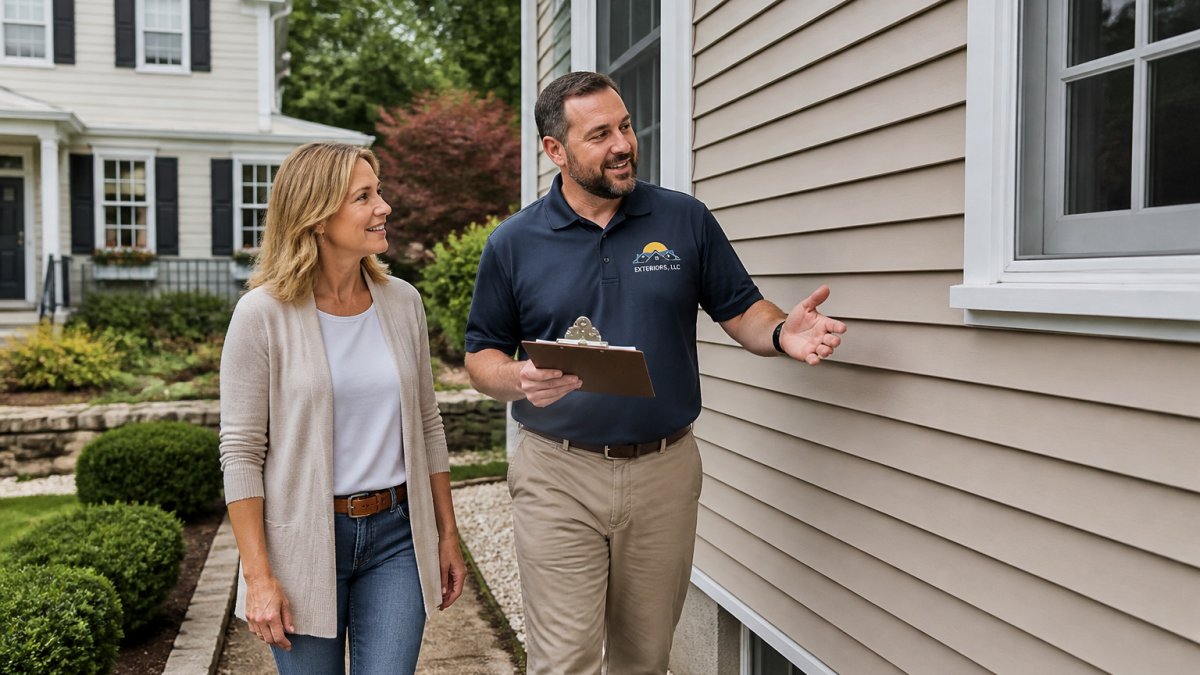
During a consultation, expect the contractor to walk the full perimeter of the house. They will check the condition of the existing siding, look for rot, gaps, and water damage, and note how the walls handle sun and wind exposure. Most visits also cover trim, flashing, and the areas around windows and doors, since those are where water most often gets in.
We recommend asking the contractor to explain what they found in plain terms. A good consultation ends with you knowing whether your siding needs repair, partial replacement, or a full install, and why.
How to Book a Siding Consultation, Step by Step
Booking a consultation takes less effort than most homeowners expect. Follow these steps to get on the schedule with less back-and-forth.
- Gather your basic home details. Note the approximate age of the house, the siding material you have now, and any problem areas you have noticed.
- Choose how you want to reach the company. Call, or request an estimate through the contact page on the All Weather Exteriors LLC website.
- Describe your goal. Say whether you want repairs, a full replacement, or help choosing materials. This lets the team prepare the right visit.
- Pick a window that works. Ask which days and times are available, and whether the visit can be scheduled around your work hours.
- Confirm the appointment. Write down the date, time, and the name of the person coming out.
Many homeowners skip the confirmation step and end up with a missed visit. Keep a note on your phone or calendar so the appointment is not lost.
Preparing for Your In-Home Siding Consultation
Most top-ranking pages tell you to request a quote and stop there. They rarely explain what to have ready before the contractor pulls into the driveway. A short prep list makes the visit faster, the measurements more accurate, and the estimate closer to the final invoice.
Two to three days before the visit
- Walk the exterior and photograph every problem area: cracked or curling panels, bubbling paint, soft spots, gaps at trim, stains under windows, and any place where the siding meets the roof or ground. Phone photos are fine.
- Pull together paperwork you already have: prior repair invoices, the original siding warranty, window and door warranties, and any inspection reports that mention moisture or rot. If the home has had water intrusion, note where and when.
- Write down the age of the house and the current siding material if you know it. If you do not know, say so, the contractor can usually identify vinyl, fiber cement, wood, or engineered wood on sight.
- Set a realistic budget range before the appointment. A rough number keeps the material conversation grounded and signals to the contractor which options to lead with.
The day before the visit
- Clear access to the walls. Move patio furniture, grills, and planters, trim back shrubs at least a couple of feet from the siding, and unlock any side gates. Contractors need to reach corners, trim, and the areas around windows and doors, which are the most common leak points.
- Make sure someone will be home for the full visit. The length of the visit depends on the size and complexity of the house. If you cannot be there, ask whether a video walk-through is an option.
- Confirm the appointment time and the name of the person coming out. Ask whether the visit includes a written estimate or whether it will follow later.
Bring a short list of concerns
Write down what you have noticed: drafts near outlets, peeling paint on one side of the house, water stains on interior ceilings after storms, ice dams, or siding that looks chalky or faded. Note what you want the project to achieve, lower energy bills, better curb appeal, protection against freeze-thaw cycles, or all three. Specific observations lead to specific recommendations.
If the house has a history of water damage or mold, mention it when you book rather than waiting for the visit. The contractor can plan to check for hidden moisture behind the siding and around flashing, which changes both the scope and the estimate.
A prepared homeowner gets a more accurate assessment and a proposal that is easier to compare against other bids. The prep work takes under an hour and pays for itself in fewer follow-up visits and fewer surprises.
Questions to Ask a Siding Contractor Before You Commit
Asking the right questions protects you from poor work. Bring this list to the consultation, or ask for answers in writing before you sign anything.
- Are you licensed and insured in New Hampshire and Massachusetts, and can you share proof? Our guide shows you how to spot poor siding installation before you sign.
- Who will actually perform the installation, your own crew or subcontractors?
- What does the warranty cover, for how long, and who handles claims?
- How do you handle deposits, and what is the payment schedule?
- What is your process if something goes wrong after the work is finished?
- Can you provide references from recent projects on homes of similar age?
Use these questions to build a siding project checklist for your own file. A written checklist makes it easier to compare contractors on equal terms and keeps your decision grounded in facts.
Choosing Siding Materials for Harsh Weather
Materials matter most when your home faces heavy snow, freeze-thaw cycles, and strong winds. The right choice depends on how exposed your walls are and how long you plan to stay in the house.
Fiber cement siding is a common choice for harsh climates. Read the guide to siding that survives harsh winters for more detail. Vinyl remains a budget-friendly option, but cheaper grades can crack or warp in extreme cold, so ask about impact ratings before buying.
Wood siding offers a traditional look, though it needs regular painting and sealing to resist moisture. Learn why James Hardie siding is a durable harsh-weather option the company installs. Engineered wood sits between wood and fiber cement in both looks and upkeep. Whichever material you consider, ask the contractor how it performs in your specific exposure, north-facing walls included, since those sides often take the most abuse.
The article compares the main siding materials for cold, wind and moisture exposure:
| Material | Best for | Key difference |
|---|---|---|
| Fiber cement | Harsh climates | Common choice for harsh climates |
| Vinyl | Budget-friendly | Cheaper grades can crack or warp in cold |
| Wood | Traditional look | Needs regular painting and sealing |
| Engineered wood | Middle ground | Sits between wood and fiber cement |
Consultation Versus Estimate: Comparing the Two Offers
A consultation and an estimate are related but not the same, and the difference matters when you are deciding what to book and how to compare what you receive.
What each one is
A consultation is an assessment visit. The contractor inspects the exterior, measures the walls, discusses materials and goals, and explains what the home actually needs. It is a conversation and an inspection, not a price.
An estimate is a priced proposal built from those measurements and a defined scope of work. It lists what will be removed, what will be installed, what is included (trim, flashing, house wrap, disposal), and what is excluded. A good estimate also states how long the work will take and how payment is scheduled.
Free versus paid, binding versus non-binding
Some contractors offer the in-home consultation and the written estimate at no charge, while others charge for them. Ask when you book: is the visit free, is the written estimate free, and is either credited toward the project if you move forward? A paid consultation is not automatically a red flag, some companies charge for a detailed assessment and credit the fee if you hire them, but you should know the policy before the appointment.
Estimates also come in two forms. A non-binding estimate is an approximation based on what the contractor can see; the final price can change if hidden damage is found once the old siding comes off. A fixed-price or binding proposal locks in a number for a defined scope, usually after a thorough inspection. Neither is inherently better, a fixed price often carries a higher contingency built in, while a non-binding estimate may come in lower but shift if rot or moisture is discovered.
How to compare two proposals
Put the bids side by side and compare the same lines, not just the bottom number:
- Scope: Is old siding removal included? House wrap? Flashing at windows and doors? Trim replacement? Disposal and dumpster fees?
- Material: Brand, product line, thickness, and color. “Fiber cement” is not a specification; the product name and profile are.
- Labor: Will the company’s own crew do the work, or subcontractors? Is the crew certified by the manufacturer?
- Warranty: What the manufacturer covers, what the installer covers, and for how long. Ask who handles a claim and whether labor is included.
- Timeline: Start date, duration, and weather contingencies.
- Payment: Deposit amount, progress payments, and final payment terms.
A bid that is dramatically lower than the others usually leaves something out, removal, disposal, flashing, or trim. Ask each contractor to confirm in writing what is excluded so you are comparing like with like.
Which should you book first?
For most homeowners, the consultation comes first. It defines the project before you compare prices, and it catches hidden problems that change the cost. If you already know exactly what you want, same material, same scope, no known damage, you may be ready to request an estimate directly, but a consultation still surfaces issues that a phone quote cannot. Either way, ask upfront whether the visit and the written proposal are free, and get the answer in writing so there is no surprise later.
Scheduling Your Siding Consultation With All Weather Exteriors
When you are ready to move forward, All Weather Exteriors LLC can schedule your in-home visit. We serve homeowners across New Hampshire and Massachusetts, and offer roofing, siding, windows, and solar solutions. Contact All Weather Exteriors LLC or request an estimate to book your consultation.
Frequently Asked Questions
What happens during a home siding consultation?
A siding consultation is usually an in-home visit where a contractor walks the exterior of your house, measures the walls, and inspects the existing siding for damage, rot, moisture problems, and gaps. The contractor will typically ask about your goals, such as energy efficiency, curb appeal, or repairing storm damage, and discuss material options suited to your climate. The length of the visit depends on the size and complexity of the home. Afterward, a reputable contractor should explain the scope of work and follow up with a written proposal rather than a verbal price.
Is a siding consultation or estimate free?
Many contractors offer a free in-home consultation and written estimate, but policies vary, so confirm before you book. Ask whether the visit and the estimate carry any charge, and whether the fee is credited toward the project if you hire them. A free estimate should still include a detailed breakdown of materials, labor, and warranty coverage. For current pricing and availability, contact All Weather Exteriors LLC directly.
How do I prepare for a siding contractor consultation?
Walk the exterior of your home beforehand and note areas of concern, such as cracked or warped siding, gaps around windows, peeling paint, or drafts you can feel inside. Gather any previous repair records, your home’s approximate age, and photos of problem areas. Clear access to the exterior walls and decide in advance which siding styles or colors interest you. Having a list of questions and a rough budget range also helps the consultation stay productive.